
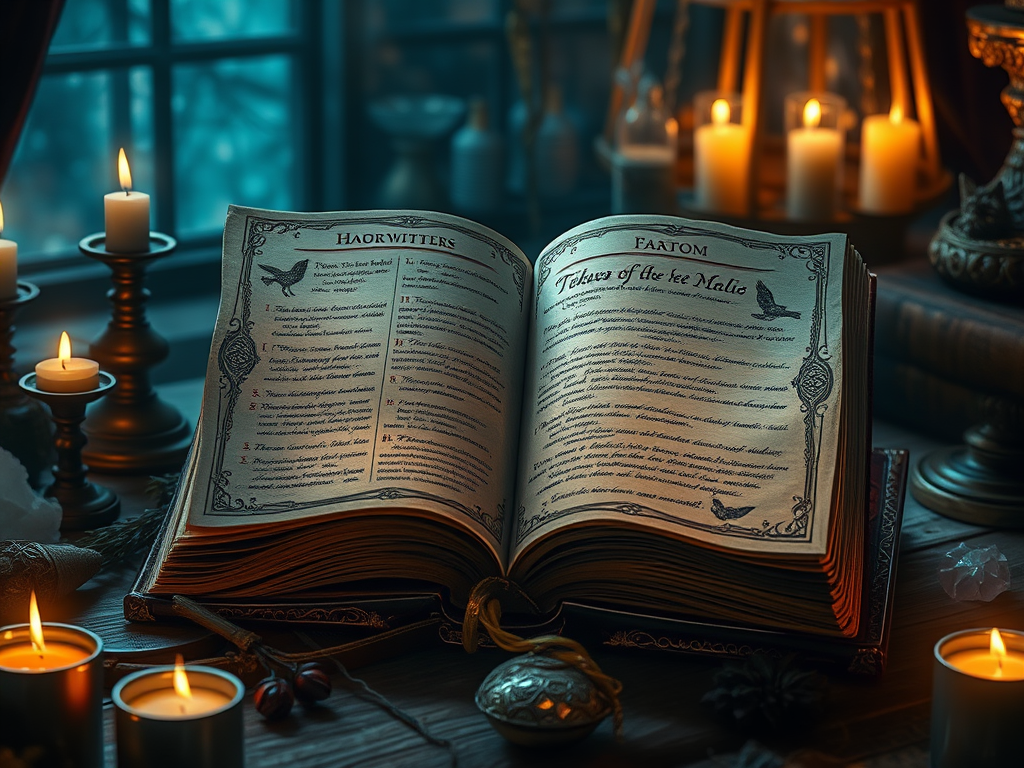
What the F*ck Magic: The Book of Shadows
Welcome back to What the F*ck Magic, your no-nonsense guide to the “huh?” aspects of witchcraft. This time, we’re cracking open one of the most iconic, yet often misunderstood, items in a witch’s toolkit: The Book of Shadows. If you’re picturing something straight out of a medieval library, bound in questionable leather and hidden behind lock and key, you’re half-right (sort of). But modern-day Books of Shadows (often abbreviated as BOS) can be anything from a fancy leather journal to a digital file with rainbow fonts. Let’s break it down.
What Is a Book of Shadows?
- Your Witchy Diary
In a nutshell, a Book of Shadows is a personal record of magical thoughts, spells, rituals, and experiences. It’s the place where you jot down those midnight revelations, spell successes (and flops!), and spiritual epiphanies. - Evolving & Ever-Changing
Unlike a published grimoire (which is more formal and static), a BOS is intended to grow and morph as you learn and explore. There’s no one-size-fits-all approach—each witch’s BOS is as unique as they are. - Sacred & Personal
Many practitioners consider the Book of Shadows to be private, shared only with trusted mentors, coven members, or kept strictly secret. Others don’t mind letting a curious friend flip through. It all depends on personal comfort and tradition.
Where Did It Come From?
- Gerald Gardner & Modern Wicca
The term “Book of Shadows” rose to prominence with Gerald Gardner, who was instrumental in founding modern Wicca in the mid-20th century. He introduced the concept as a means for witches to document rituals and lore. - Older Than You’d Think
Although “Book of Shadows” as a phrase is relatively modern, the practice of recording one’s magical and spiritual work is ancient. You’ll find historical examples in everything from medieval grimoires to personal diaries kept by cunning folk and village healers. - An Ongoing Evolution
As witchcraft spread through the U.S. and beyond, so did the idea of maintaining a personal magical record. Now you can find everything from meticulously handcrafted BOS tomes to Tumblr posts tagged as #BookOfShadows.
Why Is It Such a Big Deal?
- Personal Growth
Tracking your progress is crucial in any skill-based endeavor, and witchcraft is no exception. A BOS lets you see how far you’ve come and refine what really works (and what doesn’t). - Reference Library
Spells, correspondences, moon phases, herbal properties—most witches learn so much that it’s impossible to keep it all in their head. Your BOS is like your personal encyclopedia of magical knowledge. - Reflection & Alignment
Journaling in a magical context helps you stay aligned with your intentions. When you record your thoughts, meditations, and even doubts, you can look back and identify patterns or breakthroughs in your practice. - Legacy & Tradition
Some witches pass their BOS on to apprentices, children, or other practitioners, creating a living lineage of magical wisdom. Whether you choose to do this or keep it private is entirely up to you.
It’s Not Just Glitter Ink (But That’s Cool, Too)
- Artistic Flair
Some witches are minimalists who stick to bullet points and black ink; others decorate their pages with drawings, pressed flowers, or elaborate calligraphy. Both approaches are valid. - Digital vs. Physical
In the age of smartphones and cloud storage, a BOS can be a Pinterest board, a Word doc, or a password-protected folder. If you’re a pen-and-paper purist, a beautifully bound journal might be your jam. Either way, it’s about preserving and exploring your craft. - Ritual Enhancement
A gorgeously decorated page can set the mood for a spell or ritual. It can also engage your senses—touch, sight, even smell if you use scented ink or keep herbs pressed between the pages.
Wrapping Up & Looking Ahead
Whether you’re doodling sigils in glitter gel pens or typing out potions on your laptop, a Book of Shadows is essentially your own magical memoir. It captures who you are at each step on your witchcraft journey, making it an invaluable tool for growth, reflection, and, yes, a bit of creative expression.
But don’t close that spellbook just yet. Next time in our What the F*ck Magic series, we’ll be spotlighting:
“Candle Magic: Why Fire & Flame Are Central to Spellwork.”
From color correspondences to the art of interpreting candle smoke (yes, that’s a thing), get ready to light it up—safely, of course! Stay tuned, witches!
Join the conversation!